to add an item to your Itinerary basket.


Holmes’s Hounds.
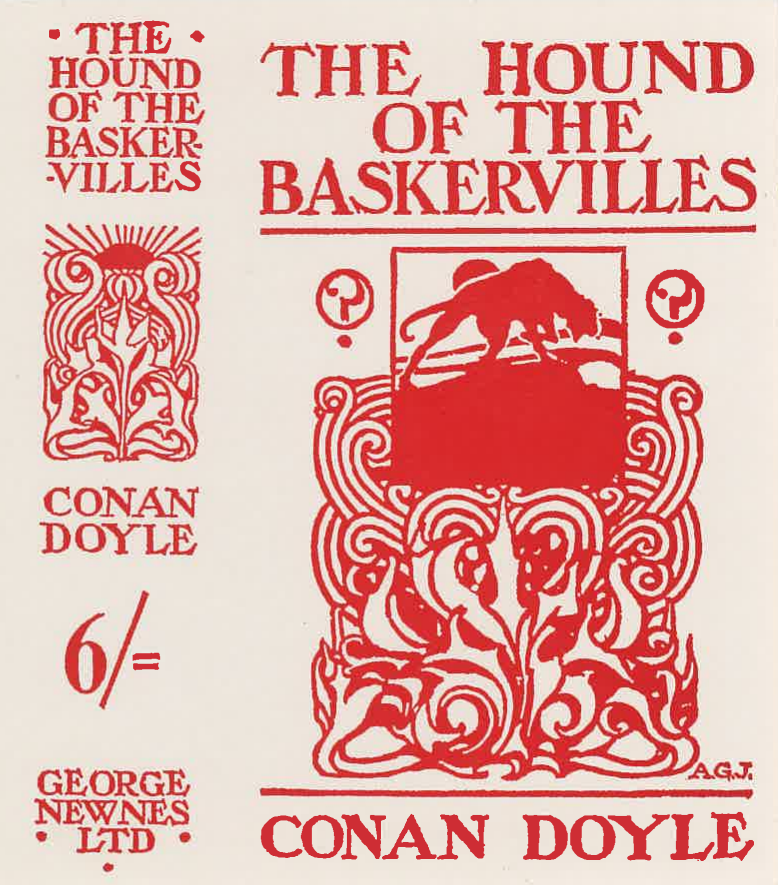
Think of dogs and Sherlock Holmes and the Hound of the Baskervilles usually springs to mind. However, a number of other canines also feature in the Holmes Canon.
Sherlock Holmes’ encounters with dogs did not start well. In his first ever case, The Gloria Scott, Holmes befriends a fellow college student named Victor Trevor. As Sherlock Holmes later recalls; “…only through the accident of his bull terrier freezing on to my ankle one morning as I went down to chapel.“
Dogs of the Victorian and Edwardian eras were often working animals. One such is Toby in The Sign of the Four. Sherlock Holmes sends Doctor Watson to Lambeth in London, to borrow the dog. Watson describes Toby as, “…an ugly, long-haired, lop-eared creature, half spaniel and half lurcher, brown and white in colour, with a very clumsy, waddling gait.“
However, Sherlock Holmes values Toby’s abilities as a sniffer dog; “Yes, a queer mongrel, with a most amazing power of scent. I would rather have Toby’s help than that of the whole detective force of London.“ This confidence proves to be well founded when Toby sets Holmes and Watson on the trail of ‘wooden-leg‘ - also known as Jonathan Small.
Dogs were also used to guard property and people. This is the job of the mastiff, Carlo, in The Adventure of the Copper Beeches. This was first published in The Adventures of Sherlock Holmes in The Strand Magazine in 1892.
In this story, Violet Hunter seeks Sherlock Holmes advice when she is offered a position as a governess. Jephro Rucastle, her potential employer, offers Violet Hunter a large salary. But Rucastle insists that Violet must cut her hair short. There are other sinister strings attached to the job, too.
Jephro Rucastle says of his mastiff Carlo: “We feed him once a day, and not too much then, so that he is always as keen as mustard.“ Rucastle then warns Violet Hunter about the dog; “For goodness sake don’t you ever on any pretext set your feet over the threshold at night for its as much as your life is worth.“
Ironically enough the dog eventually turns on its master. Doctor Watson describes the dramatic scene: “There was the huge famished brute, it’s black muzzle buried in Rucastle’s throat, while he writhed and screamed upon the ground. Running up, I blew it’s brains out, and it fell over with it’s keen white teeth still meeting in the great creases of his neck.“
Today we know that dogs can ‘read‘ human emotions by looking at our faces. They also observe our body language, listen to our voices, and sniff out our scent. Dogs thus become attuned to us.
Such is the case with the wolf-hound Roy in The Creeping Man (The Case-Book of Sherlock Holmes, 1923). Having previously been devoted to his owner Professor Presbury, the dog then attacks him on two occasions. Roy has become increasingly disturbed by the bizarre behaviour of the Professor.
As Sherlock Holmes observes: “My line of thoughts about dogs is analogous. A dog reflects the family life. Whoever saw a frisky dog in a gloomy family, or a sad dog in a in a happy one? Snarling people have snarling dogs, dangerous people have dangerous ones. And their passing moods may reflect the passing moods of others.“
The case also inspires Sherlock Holmes’s literary bent, as he confides to Doctor Watson: “I have serious thoughts of writing a small monograph upon the uses of dogs in the work of the detective.“ Whether or not Sherlock Holmes ever wrote the monograph is uncertain.
A dog provides a vital clue in The Adventure of Silver Blaze, (The Memoirs of Sherlock Holmes, 1893). Holmes travels to Dartmoor in Devon to investigate the disappearance of champion racehorse, Silver Blaze. He is also tasked with solving the murder of its trainer, John Straker.
The owner of Silver Blaze asks Sherlock Holmes:
“Is there any point to which you would wish to draw my attention?“
“To the curious incident of the dog in the night-time.“
“The dog did nothing in the night-time.“
“That was the curious incident,“ remarked Sherlock Holmes.
Holmes later explains his reasoning: “…though someone had been in and had fetched out a horse, he had not barked enough to arouse the two lads in the loft. Obviously the midnight visitor was someone whom the dog knew well.“
Though not as well known as the Hound of the Baskervilles, the other dogs in the Sherlock Holmes stories have still made their mark.
END.
Related
Comments
Comments are disabled for this post.